|
8/29/2017 1 Comment #41: Sir John A. MacDonaldEarlier this week we heard about Ontario Elementary Teacher's Federation motion to replace schools with his namesake and it sparked a great deal of conversation, mostly against the controversial motion. Public polls show that the majority of Canadians do not support the move, which brings to light three important facts:
On the bright side, press either good or bad brings awareness to the process of reconciliation in general. Personally, I think the name of John A. MacDonald should be replaced with more locally relevant names (perhaps keep it in areas where he was born, or died, or did something of local significance). Doubt I'll ever stray from my preference to focus on regional or provincial relevancy, but realize that that viewpoint is not shared by many so won't harp on it too long. While the majority and the current Prime Minister may disagree with the move, it has brought to light how far we have yet to go to share a common understanding and perspective about our shared history. At this moment in time, I think we can all agree that we disagree about how MacDonald is viewed in this country. Some see him as a hero and others as a villain, how we we all come to a common understanding will be well worth the journey and I look forward to how our leadership will proceed from here. I doubt the current public disagreement and polling will deter those who feel very strongly that MacDonald was an architect of genocide and that removal of celebratory namesakes and monuments is an act of reconciliation. To be clear, I'm not going to stop using $10 dollar bills and haven't really thought of MacDonald with any malice throughout my life. Even when I read the statements from MacDonald (compiled below by Indigenous Corporate Training) that relate to Indigenous people, I mostly want to understand the fundamentals of how he came by these perspectives, as colonialism did not start with MacDonald. He was a product of a well established system of colonialism, or then imperialism that began in the 15th century. Did he believe he and other western European societies were superior, likely. Was he given a task to establish a colony in one territory held by a political power from another territory, and guide the subsequent maintenance, expansion, and exploitation of that colony, likely? Was he an evil person lacking values, I can't really say. Did his policies lead to mass deaths and the erasure of the Indigenous family unit, yes. Taking all those factors in to play, I am going to stick with my perspective (even though it is on the fence) that more locally relevant names should replace his, in circumstances where he has not local relevancy. Here are ten statements about Indigenous people by Sir John A. MacDonald (read and come up with your own conclusions):
1 Comment
8/26/2017 1 Comment #25: LGBTQI*2S#25: When discussing LGBTQI issues, always include two-spirited peoples (LGBTQI*2S).
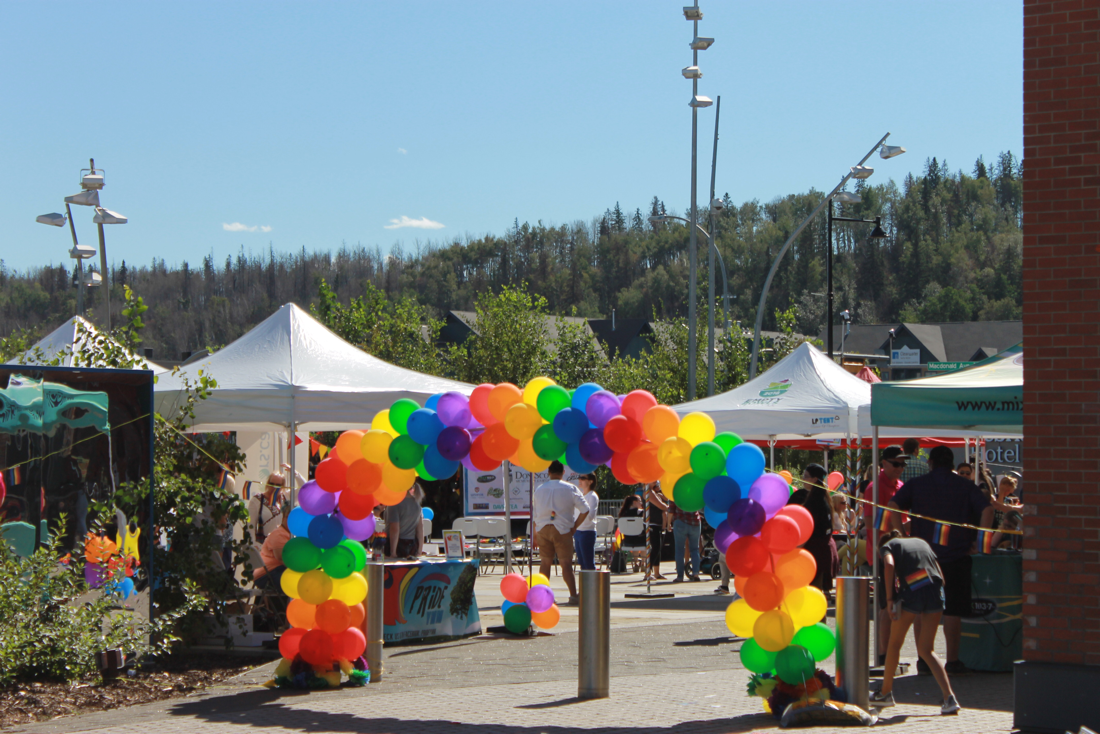
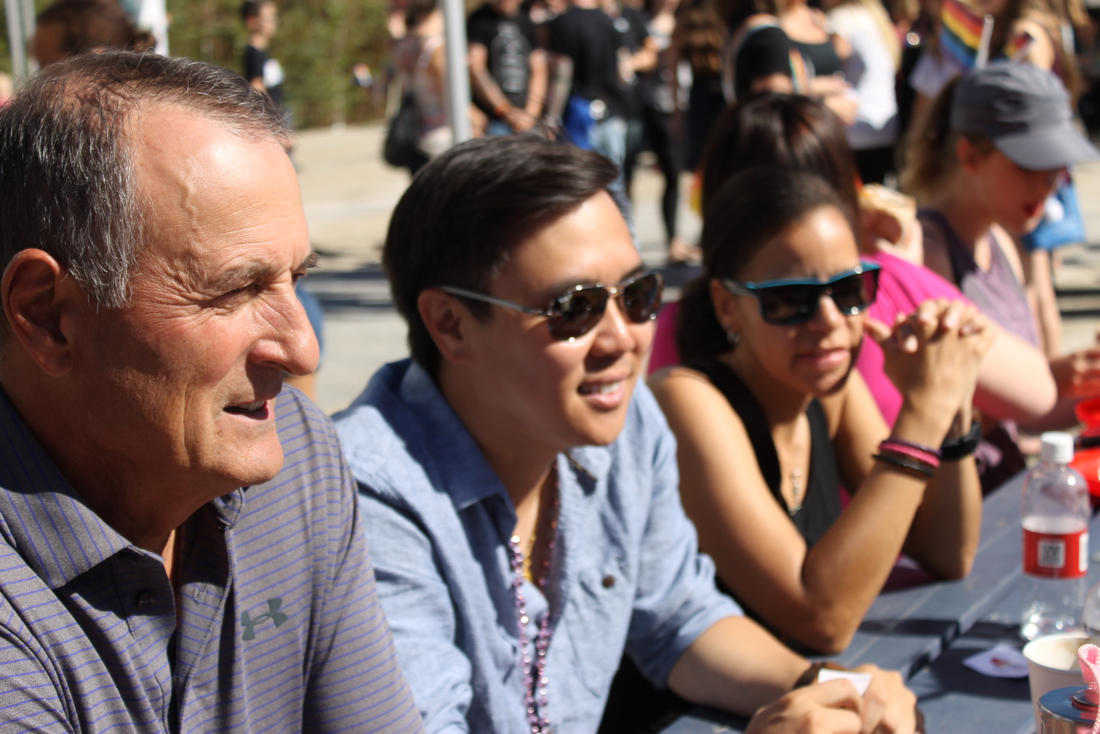
What a great day for this post, it's Pride in Fort McMurray. We attended to celebrated, as allies, the positive stance against discrimination and violence toward lesbian, gay, bisexual, transgender, queer, intersex and two-spirited (LGBTQI*2S) people. The ultimate goal of events similar to today's gathering is to promote equal rights, increase visibility, build community, and celebrate sexual diversity and gender variance. Much evidence indicates that many Indigenous societies, prior to colonization, believed in the existence of cross-gender roles, the male-female, the female-male, what is now considered a two-spirited individual. The duality is one that is encouraged and revered. Today, the "Two Spirit identity is about circling back to where we belong, reclaiming, reinventing and redefining our beginnings, our roots, our communities, our support systems and our collective and individual selves” (Alex Wilson). While I believe the Pride celebrations have done a wonderful job of bringing attention to LGBTQI*2S issues, we can always do better and ensure that our everyday rhetoric is considerate and inclusive. So I ask you to be inclusive of two-spirited individuals when referring to LGBTQI*2S. Here are some other tips for practicing allyship:
For more information about how you can support the human rights of all LGBTQI*2S people, especially those who are marginalized and systemically oppressed, please visit Egale Canada Human Rights Trust. Their vision is a Canada, and ultimately a world, without homophobia, biphobia, transphobia and all other forms of oppression so that every person can achieve their full potential, free from hatred and bias.   Register for this free course! You can also take the certificate for $65 CAD which adds a level of accountability. I'm taking the certificate version to contribute to its continued offering, but heartedly encourage you to sign up for this 8 week course (either free or not) through Coursera here starting on September 4th, 2017. Indigenous Canada is a 12-lesson Massive Open Online Course (MOOC) that explores Indigenous histories and contemporary issues in Canada. Led by my former classmate Dr. Tracy Bear, this course explores key issues facing Indigenous peoples today from a historical and critical perspective highlighting national and local Indigenous-settler relations. Topics for the 12 lessons include the fur trade and other exchange relationships, land claims and environmental impacts, legal systems and rights, political conflicts and alliances, Indigenous political activism, and contemporary Indigenous life, art and its expressions. I'm very excited to see how this course has changed from when Dr. Ellen Bielawski, Dr. Josie Auger and Dr. James Dempsey taught the course over a decade ago. I can tell you first hand that is a worthwhile investment of time. Why should you listen to me? Well I was lucky to serve as one of the Teacher's Assistant (T.A.s) for this specific course (NS 201) form 2006 to 2007. Plus, I have a Native Studies degree from the University of Alberta and was a fellow student from the professors who are leading this course (they were all far smarter than I). So with all that history, why am I taking this course? The answer is simple, much has changed the last decade. From court cases to reconciliation, the advancements in Indigenous related law and governance is astounding. There is no doubt in my mind that there will be an abundance of new information that I will encountering for the first time. A good comparison would be to maintaining technical certifications, such as a Project Management Professional, who would take annual training to maintain their designation. Working, volunteering, being a member of Indigenous communities is an honour and to maintain that honour I have dedicated myself to lifelong learning about Indigenous matters. I'll leave you with this quote: "We were very impoverished because our history was denied to us. So you can imagine all the work that we have to do still. That every community, every child that's growing, should know its history and, as much as possible, its language."
Alanis Obomsawin, filmmaker
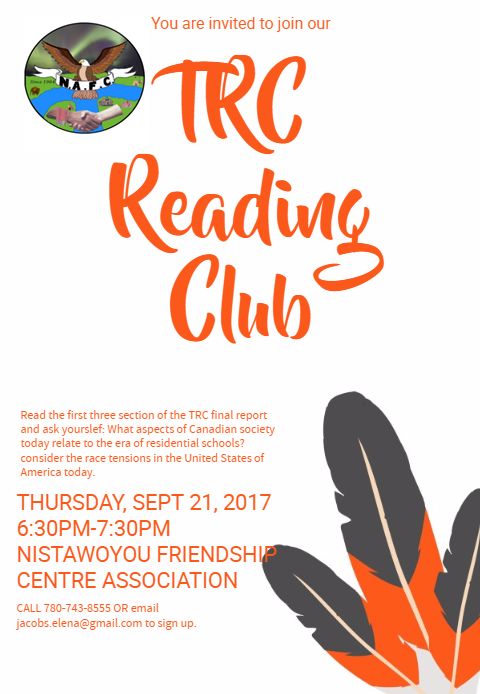
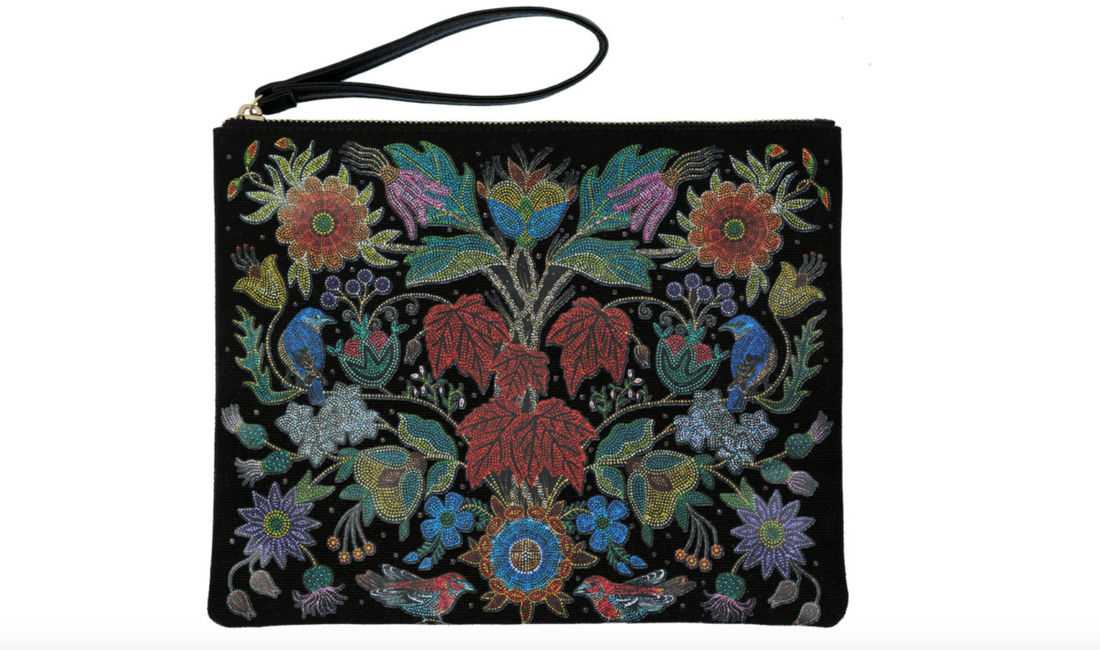 ela X Editor's Pouch - H project & Christi Belcourt Generally, I prefer to post after I have accomplished one of the 150 everyday acts for reconciliation. This will be the exception, as I'll be asking you to join me in the TRC Reading Challenge and the TRC Reading Club at the Nistawoyou Association Friendship Centre starting on Thursday, September 21, 2017 from 6:30pm to 7:30pm. I'm hoping that we can have the report completed by the end of the year so will likely be meeting every two to three weeks but would like to discuss what a reasonable timeline is with the participants. Want to participate? Here are the steps:
For the first meeting, please read in advance the first three sections of the report and reflect on what aspects of Canadian society today relates to the era of residential schools. Consider current affairs, specifically the race tensions in the USA.
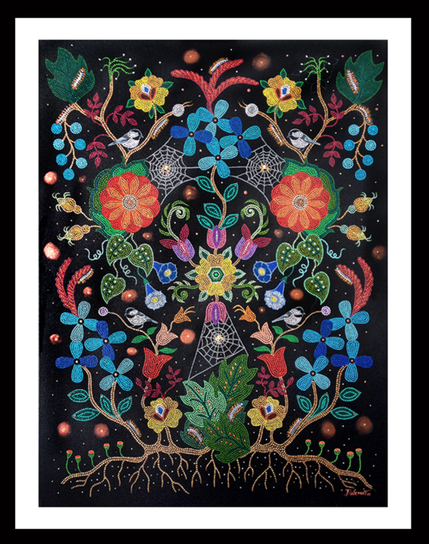
#110: Is there any public art by Indigenous artists in your area? If so, visit it and learn about the artists.
My lunch date with Ralph today consisted of a lovely walk around the Total Aboriginal Trail, a collection of public art installations on MacDonald Island Park. I'll be honest I am very biased when it comes to this project as I was on the planning committee (to be clear my small contribution paled to that of Alice Martin, Buffy Cheecham, Ana Maria Mendez and the other committee members). The theme of the trail is the Seven Sacred Teachings of love, respect, courage, honesty, wisdom, humility and truth. After receiving amazing submissions, the committee chose artistic concepts from three local Indigenous artists from the Wood Buffalo region (Treasure Cooper, Frederick McDonald, Christopher Hamacher) and four Canadian Indigenous artists (Jason Carter (Canmore), Susan Point (Vancouver), Heather Shillinglaw (Edmonton), and Carey Newman (Victoria)). While familiar with two of the artists' works quite well, I was really looking forward to this opportunity to get to know more about the five other amazing Indigenous artists. Here are very short snapshots of all the artists who contributed to the Total Aboriginal Trail:
Art inspires dialogue and change, just what we need for reconciliation. One of the highlights of today's walk was the opportunity to meet two wonderful women and discuss reconciliation and a little bit of history. I think of other walks we take, where I likely wouldn't have stopped and had a meaningful conversation about the art along the way. 8/21/2017 0 Comments #4: Attend a cultural event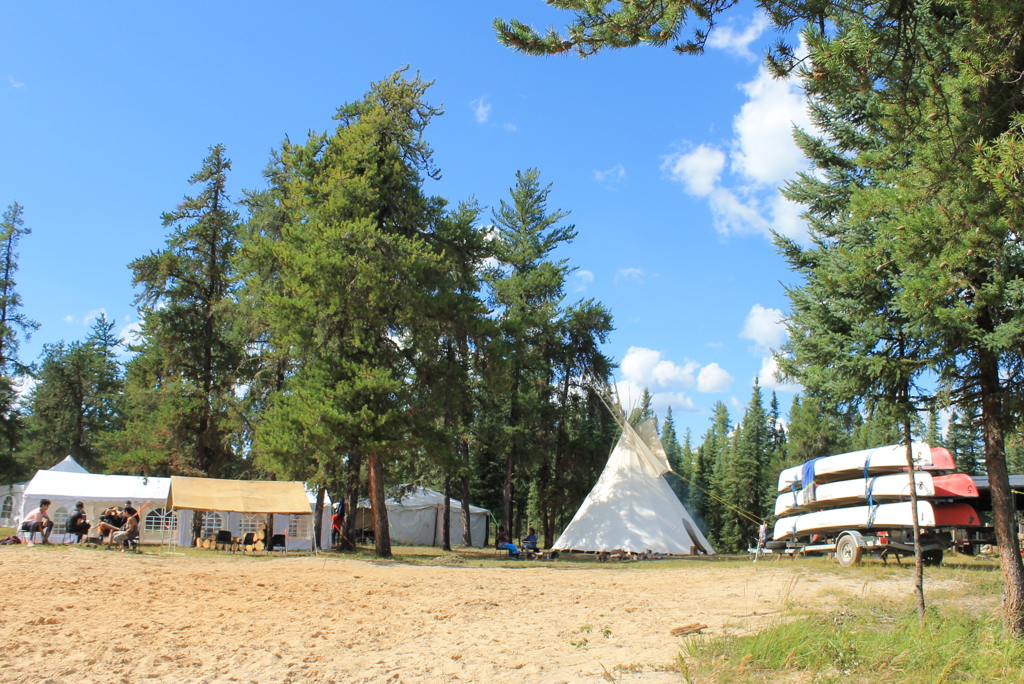 ELI Gathering 2017, Little Big Lake Today, Ralph and I had the opportunity to stop in at the Experiential Learning Initiative (ELI) Gathering in Janvier. This gathering is made possible by the Sustainable Communities Initiative (SCI), previously called OSLI. This particular culture gathering focuses on the traditional knowledge transmission from Elders and Knowledge Keepers to Indigenous youth, most of whom come from Janvier and Fort Chipewyan. At the gathering, the youth had the opportunity to enjoy traditional foods, learn how to catch and prepare fish, speak Cree and Dene languages, create beautiful beadwork and antler jewelry, as well try their hands at wilderness survival. The two communities groups who are supported by this industry led initiative is Fort Chipewyan's Lake Athabasca Youth Council and Janvier’s Sekweha Youth Centre, for more information about SCI check out their website. 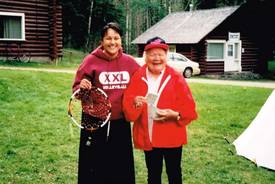 Raelene Carter and Elder Mary Anne Swan - cultural gift exchange at the Youth & Elder Gathering in 2002 Raelene Carter and Elder Mary Anne Swan - cultural gift exchange at the Youth & Elder Gathering in 2002 As a youth (many years ago), I was given the opportunity to participate in similar Youth and Elder Gatherings, offered by the Alberta Native Friendship Centre Association. We did similar activities where we were immersed by the diverse Albertan Indigenous cultures (there are approx. nine foundational Nations in Alberta) and paired with an Elder. I was paired with Elder Mary Anne Swan, she was the kindest soul that had a laugh that could fill a room, while her voice was always tempered at almost a whisper. In the late 1990s, it was the Elders Council who championed the Youth within the Friendship Centre Movement. The first youth council was created in Lac La Biche, and it spread throughout the province, then nation. The objective was that youth council members would be mentored by board members and Elders alike to become Friendship Centre board members when they became adults. Friendship centres found a way to develop sustainability in leadership and governance.
Similar to the Friendship Centre Movement, the Industry players who came together with the communities to form SCI, established a common vision of co-creating safe, health, sustainable communities where people can work, live, play and raise their children. To achieve that vision, SCI invests their efforts in the development of youth. Building support systems with community leadership, their families, Elders and other Knowledge Keepers, the youth are strengthened to be active participants in the shaping of their community's future. The lesson: if you want your organization and community to thrive and sustain, invest every chance you have in Indigenous youth. 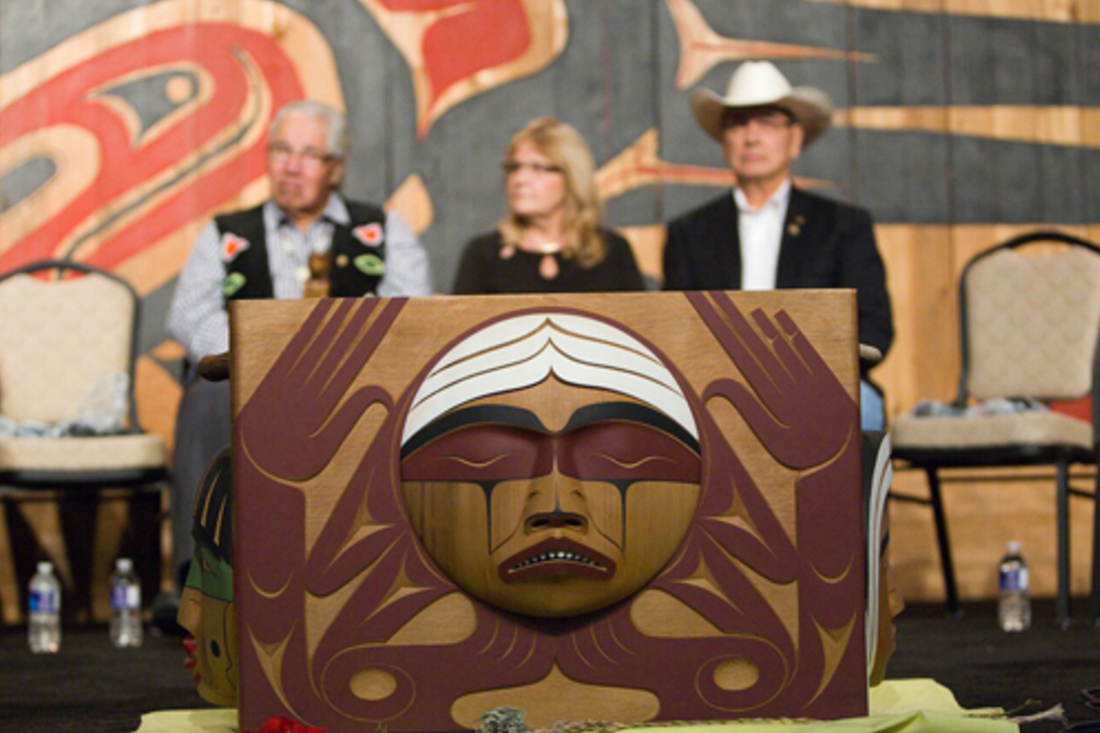 The three TRC commissioners sit behind the Bentwood Box at the Centre for Truth and Reconciliation in Manitoba. From left to right: Honourable Justice Murray Sinclair, Dr. Marie Wilson, and Chief Wilton Littlechild. Photo sourced from: National Centre for Truth and Reconciliation Archives, Photograph, British Columbia National Event, TRC. #93: If you actually want to see the relationship between Indigenous and non-Indigenous people change, and commit to making reconciliation a part of your every-day ethos.
Number 93 is a challenge for me. Ethos is a greek method to appeal to another through persuasion. I'm not sure if I am necessarily qualified to tell you that reconciliation will make Canada a better place to live for everyone, but that won't stop me from trying. It gives me great comfort to know that three people, the most qualified people on Turtle Island, are saying that very same thing. Take a minute and read about the Commissioners of the Truth & Reconciliation Commission and their amazing achievements here, and then think about how their qualifications impact your perspective of the TRC. It adds immense credibility in my mind. A CBC senior manager, a judge, a world class athlete, Honourable Justice Murray Sinclair, Dr. Marie Wilson and Chief Wilton Littlechild respectively have done it, surpassed it and created new definitions of success for Indigenous people. I trust that they collectively, after hearing thousands of testimonies and coming to the table already equipped with expertise, have created recommendations that will have such a powerful effect on the cultural arena the dictates the everyday lives of Canadians. In western culture, it is dismissive to think that culture is only a reflection of the underlying social conditions. In fact, culture is a force in and of itself that shapes how we lead our daily lives, our economic systems and our political realm. While academia is leading the conversation of reconciliation, I believe that it needs to be infused in both non-academic and academic spaces. I'm really more interested in how reconciliation is discussed in the day-to-day conversations. Ethos, as one of Aristotle's appeals, is mostly used in academic or legal debates. Most people don't think everyday conversations are using appeals, but they do. A very good example is advertising. As a classic consumer, I'm easily persuaded to purchase a new pair of running shoes because a famous athlete endorses them (ethos); or, hotdogs which are my favourite, show me a commercial of someone eating a hot dog (logos) and their satisfied smile immediately appeals to my desire to be happy and not hungry (pathos). How do we apply Aristotle's art of persuasion to reconciliation? Well, we have three options: Ethos (prior knowledge) - is the perspective that others have of you and how it allows you to exert your influence over your audience. The TRC Commissioners are seen by Canadians and Indigenous people as being experts and therefore their collective voice gives credibility to the report and the Calls to Actions. Pathos (emotional appeal) - in my personal opinion emotional appeals related to residential schools is what leads to the laying of guilt so perhaps not the best approach in some circumstances, but in others yes. Logos (scientific data) - written records and scientific data relating to the facts of colonization (statistics about generational trauma, educational achievement, incarceration, health). After all that non-Indigenous based philosophical theory, here is my final interpretation of the Act of Reconciliation #93: In order for reconciliation be successful, we all need to be equipped with prior knowledge about the history and effects of colonization in Canada, in order to speak with credibility and authority about reconciliation which will allow us to be agents of change to shape our every day culture and society. 8/17/2017 0 Comments #7: Read an autobiography written by an Indigenous person and #36: support local Indigenous authors by purchasing their books.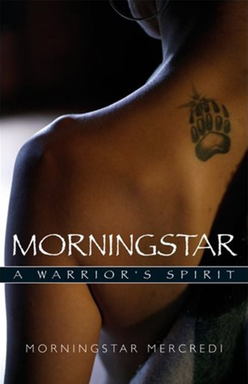 I chose to read Morningstar Mercredi's autobiography. Her account of her young life, although filled with pain, abuse and alcoholism was told with such clarity and almost sharpness (but not in a bad way) that allowed you to hear her voice. As I read more I could almost hear her as a young girl, a youth and woman grow, finding her way in an uncertain world. The poetry throughout was mesmerizing, connecting the reader to a spiritual realm that was just on the periphery of the story.
The book is aptly titled "A Warrior's Spirit". She is a warrior, having survived extreme generational trauma caused by the residential school system, been subjected to sexual and emotional abuse, and overcoming alcoholism. The strength coming from the positive and loving relationships she had with her grandparents, who often cared for her in Fort Chipewyan. Her memoir is a living example of how systemic racism in Canada has impacted the lives of so many, from generation to generation. Indigenous women in particular are the victim of colonial patriarchy, seen as lesser than beings, and preyed upon. Her life story took place mostly in Fort Chipewyan, Fort McMurray, Uranium City, Edmonton and some time in Saskatchewan. It helped me to understand the life of many people who due to their parent's addictions and trauma based behaviours were moved from community to community cared for by family or friends. The inconsistency of her life was the only constant. I'm so fortunate to have always had a place to call home, never fearing where I would next rest my head. Her son, Matthew, she didn't provide that same consistency initially but grew as a mother and overcame so much to provide him with that consistent and loving home. Her love for her son, showing such incredible personal strength is what I believe will begin to heal the trauma that residential schools left upon families. One story in particular fascinated me, her account of her mother's use of cleaning as an unspoken punishment or penance. Speaking with former students from the same school, Convent of Holy Angels Indian Residential School, they too recounted that cleaning was often used as punishment at the school and they themselves often used cleaning as a disciplinary parenting strategy. It was at that moment that I began to self-reflect on my childhood and how clean my father always kept everything. His desk perfectly organized, pens lined up neatly beside each other. I don't know if it is something that was impressed upon him by my grandmother who attended residential school (not necessarily as a punishment) but as something that we are all impacted by in some way. Throughout the book, I felt very honoured that she chose to share her story, as terrifying and sad her early life had been, she made a choice and today lives by that choice. All of our parents, who didn't have parents in some cases, chose to parent differently. We are so fortunate to be the generation after that generation, all of whom are warriors in my eyes. Here are the links to buy her book: Amazon and Indigo 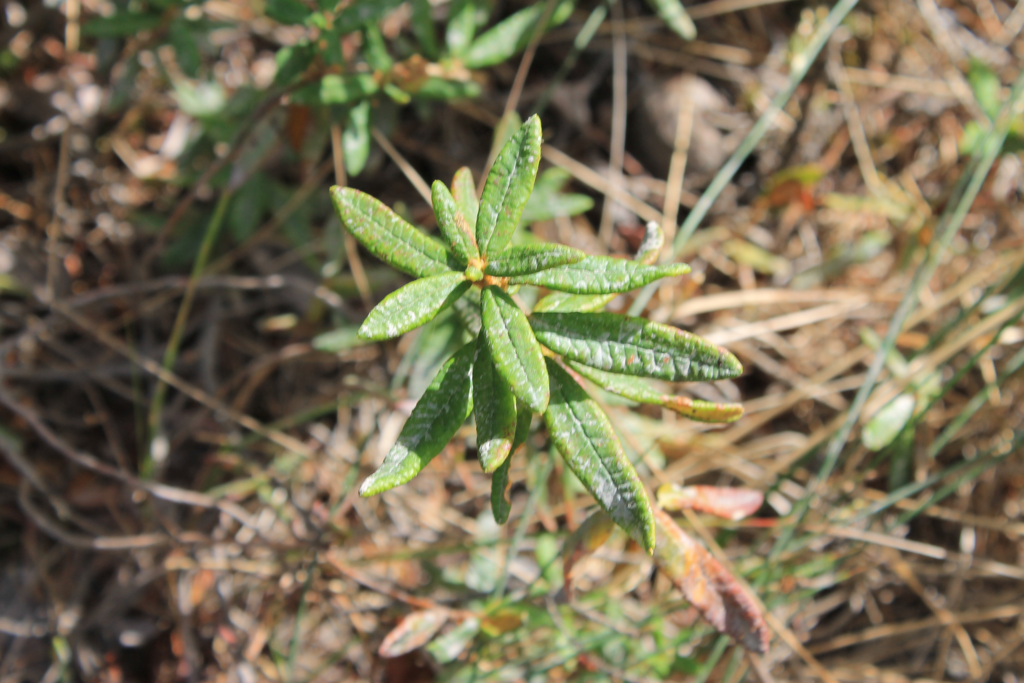 Maskêkopakwa – Muskeg Tea I chose to feature Muskeg Tea because it is probably the most versatile plant and flower in the North, it's Ralph's favourite and it's also our 3rd wedding anniversary (we had sprigs of muskeg tea in some of the flowers arrangements). You may recognize this plant as Labrador Tea but here in Northern Alberta we call it Muskeg Tea. Likely we call it that because we have much of Canada's wetlands; and that my friend is where Muskeg Tea thrives. You don't often find a campfire that doesn't have muskeg tea brewing in the tea pot, at least I don't but that's because Ralph makes it into a tonic for medicinal reasons. It's caffeine free but has an aromatic and slightly bitter taste similar to black tea. One of the major benefits is that it is accessible all year long because the leaves never die off all at once and when they do die will generally stay attached to the stem. If you need to, you can dig it out of the snow and boil it to your heart's (excellent for increased circulation) content. It has a vast number of medicinal uses. This little plant is an alterative, analgesic, diaphoretic, diuretic, pectoral and tonic. It can be made into essential oil, hydrosol, infused oil, ointment, poultice, sauna herb, spice, tea and tincture. Here a (just) a few things you can use it for:
How to repel ghosts: Hang bundled dried plants in your closet, it also found to do a good job of repelling moths. How to make tea: Steep one heaping teaspoonful of leaves or flowers per person in boiling water for 5 minutes. The colour should be a clear, pale amber-orange. It can also be used to stretch black tea for a more aromatic drink. It can make you very drowsy and is a strong diuretic so use infrequently. How to make infused oil: 1 cup (250 mL) tea flowers 1.5 cups (375 mL) jojoba oil or any oil that you have on hand Gather flowers before the heat of the day. Place flowers in a jar and cover with oil. Infuse for up to 4 weeks, shaking daily. How to use as a spice: You can use the whole leaves as a substitute for a bay leaf in stews, sauces and soups. You can also crush or grind the leaves to add to meat dishes or in a salad.My mom found me Wild Muskeg Spice by Laughing Lichen which is mixed with Sweet Gale (that you can also get in delicious tea form by Algonquin Tea Co.). Or go pick yourself and make your own delicious creations. 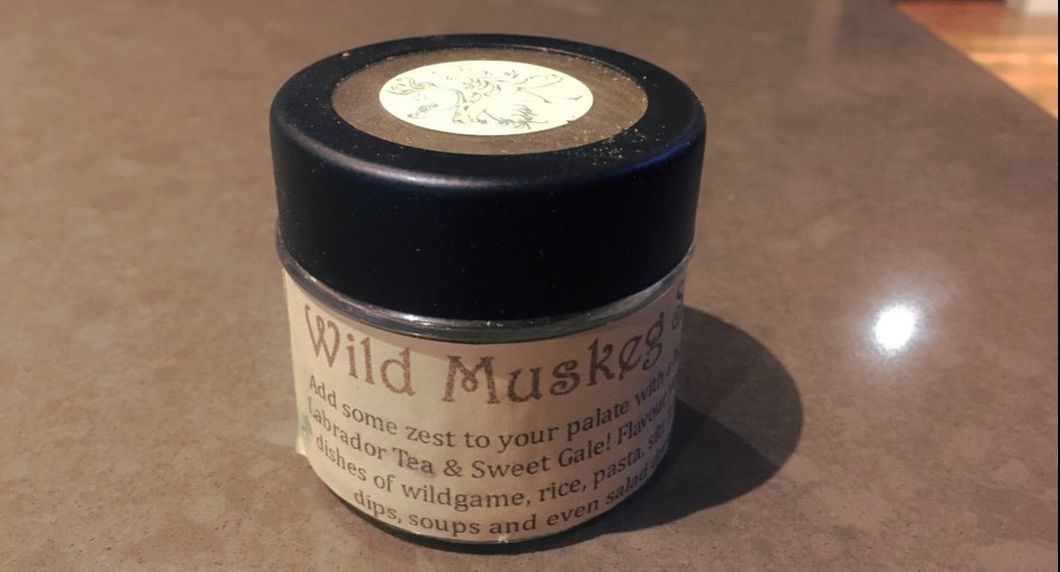 There are a few ways to acknowledge the present and past Indigenous land title and territories. I've used several in the past but to prepare for this blog post I spent some time understanding some of the underlying meanings behind every word. Through that research I've changed how I will acknowledge land moving forward and offer them to the world wide web. Before you skip ahead, hear me out as to why I will now be acknowledging Métis territory as a separate entity from Treaty territory. They are different (not one above the other, but equally important and deserving of acknowledgement) and here are a few initial reasons as to why:
In order to make a claim for Aboriginal title, an Aboriginal group must satisfy the following criteria: (i) the land must have been occupied prior to sovereignty, (ii) there must be a continuity between present and pre-sovereignty occupation, and (iii) at the time of sovereignty, that occupation must have been exclusive. You may be asking, how can Métis have Aboriginal title, aren't they are result of the fur trade? Well they are but the fur trade began a hundred years before Canada became a sovereign nation (which varies province to province). Canada is 150 years old, the Métis became a Nation about 200 years ago, and the fur trade began roughly 250 years ago. When Rupertsland was sold to become Canada, it was done so without either the Métis, First Nation or Inuit Nations' consent and without extinguishment of their Aboriginal title. If you'd like to learn more about intricacies of Métis land title click here. Why did I go on that tangent? It's now my personal opinion that any land acknowledgment should be reflective of the unique and unceded territory of the Métis people. I am by no means an expert so if you disagree with my conclusion please feel free to correct me. To be fair, an act a day doesn't exactly allow for extensive research. Land Acknowledgements:
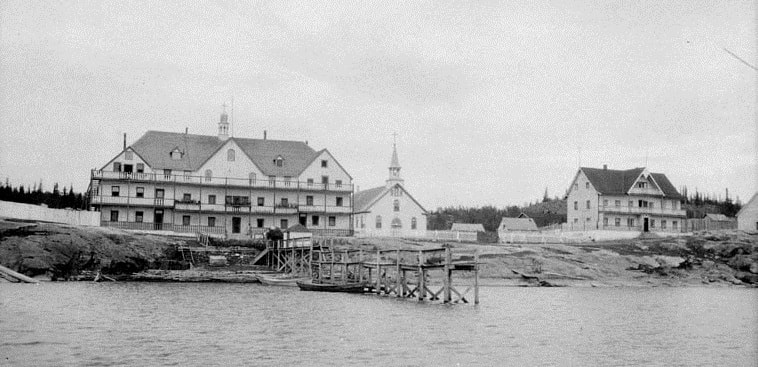 This past weekend I had the opportunity to travel to Fort Chipewyan to attend the last two days of the Holy Angels Commemoration Memorial. While the Residential School building is no longer standing, the impacts it left on the community and generations of former students is undeniable. This school was called the Convent of Holy Angels Indian Residential School and was open from 1902 to 1974 (a smaller school was started earlier though). It's others names were Holy Angels Indian Residential School, Our Lady of Victoria Indian Residential School, Fort Chipewyan and École des Saints-Anges. Every one of its names are forever etched in my mind. It was operated by the Grey Nuns and Oblates of the Roman Catholic Church, the sisters and brothers mostly originated from Montreal, where the majority of the records about this school are currently located (and should be handed over to the Truth and Reconciliation Centre). The sole purpose of the Holy Angels school was to assimilate children of their Cree, Dene and Metis culture and language in North Eastern Alberta. It is important to note that some students from the region were sent further to other residential schools (St. Henri in Fort Vermillion and Blue Quills in St. Paul). Today, the site of the Holy Angels Residential School has been repurposed and reclaimed for community celebrations and cultural retention. Aside from the arbour, the rest of the area is practically frozen in time. Wherever you walked, you are surrounded by barbed wire fences, serving as a stark reminder that the school was a prison and those fences were there to keep children, as young as 6, imprisoned. Having visited some of the homes along the Athabasca River, I think of how quiet and sad the communities and homes of parents and grandparents would be. There are several books that consider what life would be like if birth rates declined or just stopped (Children of Men and Handmaid's Tale). I have trouble imagining what my street would sound like without the laughter and shrieks from the neighbourhood children. Healing is slow, but it underway, this weekend was an example of the incredible strength of former students and their families. We sat in talking circles and listened to their stories and about how they found a way to love and be loved despite being brought up without compassion or parents. Having the gathering at the site of the school and taking it back as a place to share traditional ways of life such as feasting, beading and speaking Indigenous languages is testament to this communities' cultural endurance. It is an honour and privilege to have been welcomed into this community for the last seven years. If you are reading this and want to take a trip to Fort Chipewyan please do, you can go by boat, plane or on the winter road. Go for a day or overnight and see for yourself how this incredible Indigenous community continues to thrive. Ralph and I are headed to Athabasca to celebrate my Aunt and Uncles 50th wedding anniversary so on the drive we listened to two episodes by the Indian and Cowboy podcast network (search Red Man Laughing on iTunes). The first was Ryan McMahon's Red Man Laughing "Reconciliation" episode. Ryan and I were part of the National Friendship Centre movement back in the early 2000s. I didn't know him well by any means but I'm so incredibly proud that a fellow Friendship Centrer has developed such a widespread and transformative platform for Indigneous conversation. The conversation on this particular podcast was his thoughts on Reconciliation in Canada. He started with a very impactful statement: "think about it, we aren't supposed to be here", if everything went by plan, Indigneous people would have been fully assimilated or exterminated. McMahon disagrees with reconciliation, his argument is that for reconciliation to happen truly, we need decolonization in Canada. For that to happen he had a few suggestions for non-Indigenous ppl: donate your lakelot to Indigenous people for language retention, invite an Indigenous student to live in your sewing room (after you clean it out) for free, donate your acreage to Indigenous groups, etc... He made it sound as though this is so outrageous that is unlikely to happen but there are examples of similar donations taking place. In Edmonton, the family donated Fox Farm to the City of Edmonton with the cavaet that it will be for exclusive Indigenous use (not stipulations on the type of uses - respecting that Indigenous groups would identify uses themselves). For more information on Kichiy Askiy click here. Decolonization is education everywhere but particularly schools. We hear that the curriculum is changing, however will it challenge the settler mentality for future generations enough to bring decolonization to fruition? I think it can, but it will take an enormous amount of time as McMahon says. He quoted Murray Sinclair that "the truth will set you free" and added "but first it will piss you off". That means having uncomfortable conversations, Canadian learning about the true history and getting pissed off about the atrocities in this country. Essentially, this won't be happening overnight. 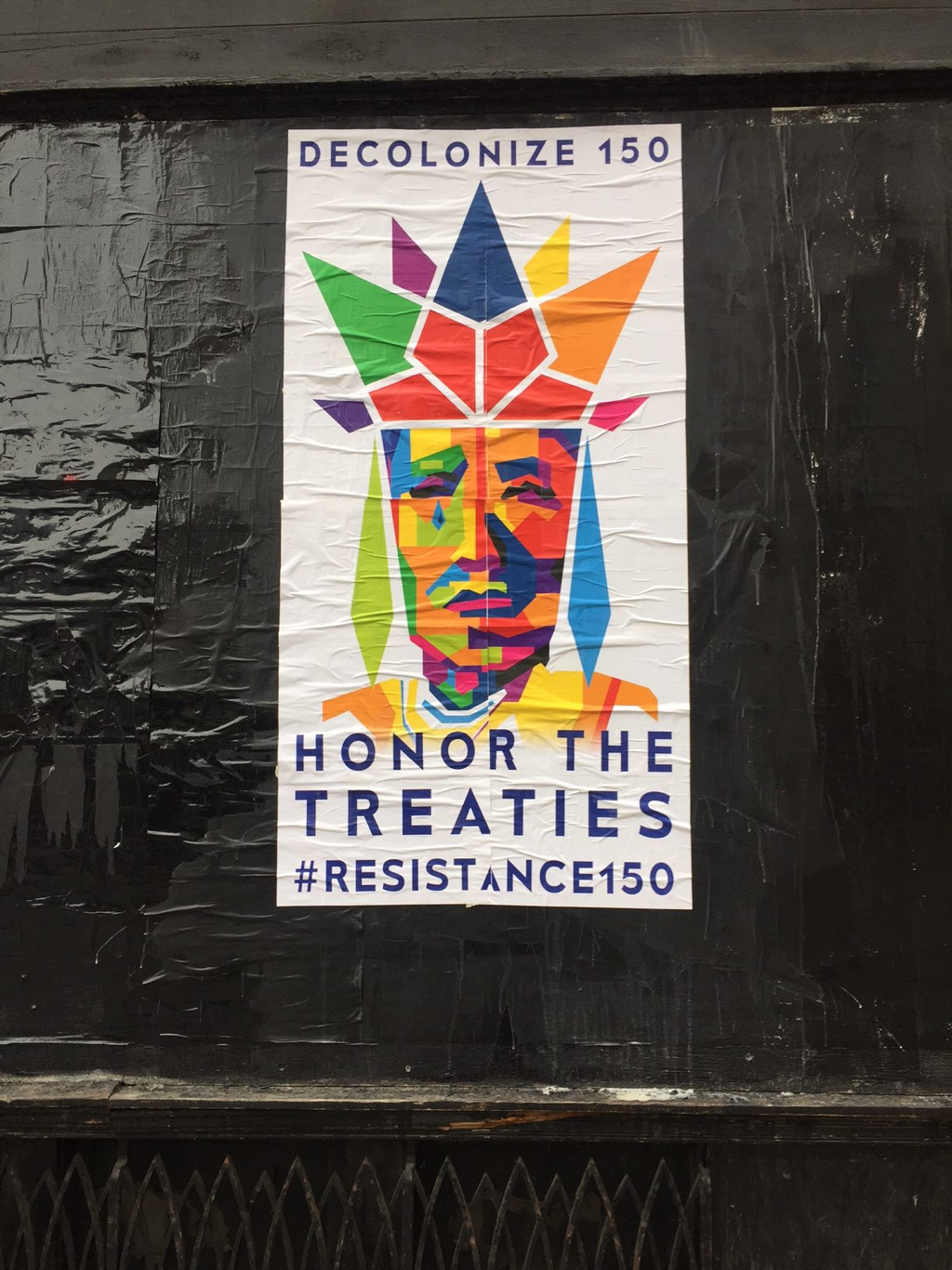 The second podcast was the first episode of Kanada Pod hosted by Lisa Gibrav recorded on the unceded Coast Salish Territory at the Kanata Festival in Vancouver. In this episode, Ryan McMahon and Gibrav talked in depth about Canada 150, Canada 300 and what needs to happen in between.
On July 1, 1867 the Eastern British colonies united without the proper consultation with Indigenous people, which was followed by the Western provinces joining the nation we now know as Canada. 150 is a celebration of the 150 years sovereignty over the land mass of Canada. What that celebration is missing is recognition of the original inhabitants, their dispossession and genocide within that 150 years and the treaty promises and contractual obligations of Canada. McMahon reminded us about the two row wampum treaties, where both parties agreed to co-exist in harmony but separately. His analogy was "you stay in your canoe and I'll stay in mine". These foundational agreements that led to prosperity through the fur trade was swiftly forgotten with the establishment of the Canadian government. It's subjugation and enslavement of Indigenous communities and the cowardly targeting of Indigenous children had one goal: to espouse colonial assimilation and break the bond of uncivilized lifestyle. Gibrav and McMahon discussed how Indigenous people turtle island wide all saw the plans for 150 and asked how could we possibly celebrate colonization and the systemic attack on Indigenous way of life. An example was the 66 year ban on potlatches or the residential school system. McMahon sounded encouraged when he described the Indigenous response to 150, describing Indigenous people as having become "emboldened" and the opportunity we have to align our priorities and discourse. The challenge is now that the year of 150 has commenced, which he identifies rightly as July 1, 2017 to July 1, 2018, how are we as Indigenous people are going to ensure the conversation about decolonization and Indigenous liberation continues throughout the full year, setting the foundation for the next 150. The vision for Canada 300 is a celebration of the diversity within Canada, that before 2167, we similar to Europe, encourage the exploration within Canada and the difference Nations here - there are 64 different language groups in Canada, each with numerous languages, and future each language their own songs, laws, traditions and civilizations . I'm from Northen Alberta myself and I've always wanted to learn more about Dakota or Blackfoot cultures this is my opportunity to explore the diversity within Alberta itself, in Wood Buffalo we have Metis, Dene and Cree as well as visitors from other Indigneous nations within our region - let's celebrate our Indigneous diversity. Both McMahon and Gibrav agreed that for the next 150 years to see positive change that non-Indigneous Canadian "keep and open heart and mind to Indigneous liberation". We are the strongest we have ever been as Indigneous people, with more Indigneous university students than ever. with more doctors and lawyers than ever and with people returning to the land. Opportunities such as urban reserves and resurgence of Indigneous languages will give our youth the foundation they need to forge their way forward. McMahon's vision for the next 150 is a safe place to live for our youth, Gibrav expanded on that vision challenging the country and Indigenous sovereign governments to address (instead of coping with) the underlying societal problems that have led to those safety concerns. Further they challenged Indigneous people and allies, those with "a strong heart to come up to the front of the line" of #resistance150. Crystal Fraser is a PhD Candidate in History at the University of Alberta and Gwichya Gwich’in from Inuvik and Dachan Choo Gèhnjik, Northwest Territories. Her research focuses on the history of residential schools in the Canadian North during the postwar period. Dr. Sara Komarnisky is a post-doctoral fellow in History at the University of Alberta and is of Ukrainian settler heritage. She is an anthropologist currently researching art and craft made by Indigenous patients at Canadian “Indian Hospitals” from the 1940s to the 1960s. Together they have developed a list of 150 Acts of Reconciliation for the remaining 150 days of 2017. (http://activehistory.ca/2017/08/150-acts-of-reconciliation-for-the-last-150-days-of-canadas-150/) I accept the challenge to complete the list and document my learnings from each everyday act. So far I've complete #118 by sharing this list on Facebook and for #150 a week ago I made a list of 25 acts of my own making (duplications are bolded). 150 Acts of Reconciliation
8/2/2017 0 Comments Dreamtime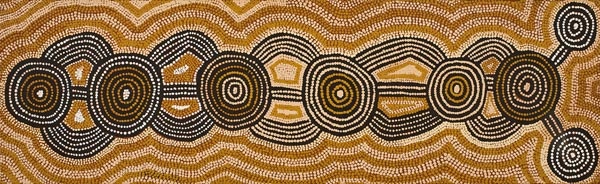 Yala Yala Gibbs Tjungurrayi Kuninka (Western Quoli) Dreaming at Kaakaratintja, 1987 My dreams have a way of pulling me in, sometimes to my own horror. Lately I've been having a lot of dreams that would terrify me so much that I couldn't return to sleep. At 2:30 a.m. in the morning you are shining the dim light from your iPhone at the dark corner to see if any monsters are lurking there. I don't know where the dreams come from, or why they come all at once for a time. Maybe they are a way of telling me that something is wrong that needs to be righted.
Many Cree people believe that spirits visit us in our dream state. Especially those spirits that have departed from our world. Separation from the body does not necessarily mean that all ties to loved ones are disconnected. It is believed that spirits have the power to manifest themselves in other forms. Take the Northern Lights, as an example, there is a believe that it is our ancestors dancing. My grandparents were big dancers so I love that particular thought. Various Spirits such as the Old Woman, the bear or the buffalo often enter the Sweat Lodge during prayer. At other times, depending upon our need, particular Spirits are called upon to provide us with assistance. I must need to be scared half to death. |
About me
I grew up in Athabasca, AB and have spent the majority of my life in Northern Alberta or Montreal, PQ. My husband has been in Fort McMurray since the 70s and continues to love this town and all that it has to offer. We are avid outdoor enthusiasts, spending our summer weekends quadding and camping. As Opimian members we thoroughly enjoy wine pairings and tastings and are working on our wine collection. Ralph is a carpenter by trade and has framed more houses in Fort McMurray than I could count and knows the city inside and out. I work all throughout the region from the NWT to Janvier for the tribal council. My passion is doodling and photography which is featured throughout the website (various mediums), writing, Indigenous studies, and learning in general. Categories |


 RSS Feed
