|
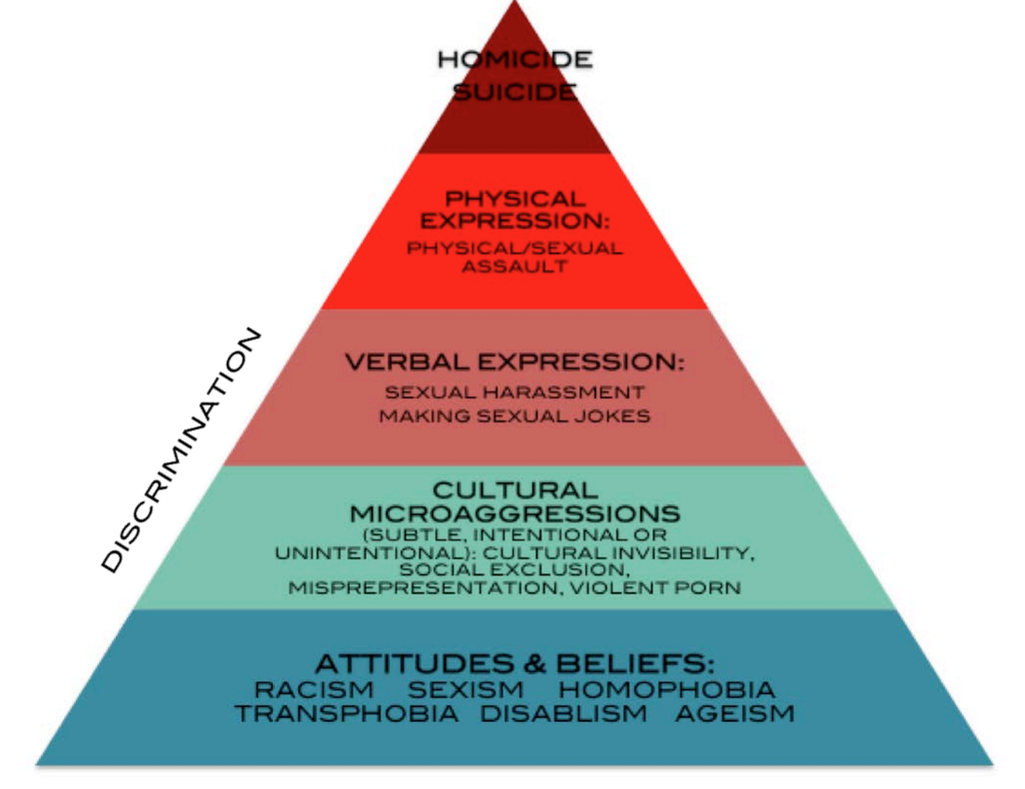
11/4/2018 1 Comment #39: Gently counter racist or stereotypical comments with fact-based information whether you are at a party, the office, or the gym.I watched a recent video of a racist rant that occurred on an Edmonton bus and wanted to talk about how calling out racist or stereotypical comments is the first step to changing the world we live in. Before we take on how to counter racial based comments or jokes, let's come to an understanding of the nature of racism. We should be able to identify and analyze those practices which are racist, before we can effectively and appropriately combat racism. We each have different meanings when we use the word, and the consequent confusion, together with the strong feelings it usually provokes, can aggravate conflict. We use other words, too, like prejudice, culture and ethnicity, each with our own meanings implied. It is difficult, nearly impossible, to suggest a single simple definition of racism. Racism changes its form, as well as strength, over time and from place to place. It manifests itself in different forms in the world we live in today. Indeed, it is this changing quality of racism which makes it difficult to identify and challenge, and which helps make racism so contentious an issue today. For the purposes of this blog post, we use a four-dimensional approach to racism, separating out racial prejudice, racial discrimination, racist ideology and institutional racism. These dimensions are related to each other in complex ways, and one or more of them might be present in any particular situation. Racial Prejudism It can mean, literally, pre-judgment, making up one's mind about others, without sufficient information. It suggests both an unfounded or unreasonable judgment, and a feeling tone, usually (though not always) being against something. Racial prejudice refers to negative attitudes towards those classified on the basis of physical or cultural characteristics. First, people are identified as members of a group because of their physical appearance, culture or ethnic origin, real or supposed. Secondly, they are judged according to the presumed characteristics of that group. Racial Discrimination Prejudice and discrimination usually go hand in hand. Racial discrimination usually refers to behaviour which disadvantages people identified on the basis of their (real or supposed) membership of a racial or ethnic group. It is possible to discriminate without being prejudiced and vice versa. However, most attitudes, and prejudices, include a behaviour orientation or inclination to act in a certain way. And the stereotypes we hold affect the ways we respond to, and the expectations we have of, others. Language, including body language, changes depending on how we feel about the people we are with. Individual discriminatory behaviour therefore covers a whole range of actions, from refusing an Indigenous family rented accommodation, or through to the less conscious, but often as hurtful, shifts in expression, avoiding the seat next to someone different, or unknowingly using a derogatory label, like `Squaw", when in the company of an Indigenous person. For the video rant, I would consider that to be abject racial discrimination. Racist Ideology Racism as an ideology is a historical and social construct. It supports conventionally accepted versions of history and society. It loads our language and fills our images, although in an interactive process where we each put our personal stamp on the shaping. It reinforces the domination of particular cultural groups, whose norms and values it reflects. Thus racism as an ideology can also be seen as cultural racism. Institutional Racism Institutional racism refers to a pattern of distribution of social goods, including power, which regularly and systematically advantages some ethnic and racial groups and disadvantages others. It operates through key institutions: organized social arrangements through which social goods and services are distributed. These include the public service, the legal and medical systems, the education system. People working in these institutions hold expectations and beliefs which influence how they do their jobs, and how these institutions affect other people. Ok, now that we have a better understanding of the dimensions of "racism", now let's talk about how to address it before it escalates. There is a good visual to help how addressing racial comments and better yet attitudes and beliefs. The Discrimination/Violence Pyramid.
1 Comment
11/7/2020 01:52:28 am
I am sad that racism still exists in our country. I just cannot fathom the idea of having inequality forever. I am hoping that something changes soon. I am part of the minority, and it is always scary to be alive. People are always looking at us in bad light, and believe me, it is scary. I hope that we can go and change this fact for the next generations to come, I really want that to happen, I really do. Leave a Reply. |
About me
I grew up in Athabasca, AB and have spent the majority of my life in Northern Alberta or Montreal, PQ. My husband has been in Fort McMurray since the 70s and continues to love this town and all that it has to offer. We are avid outdoor enthusiasts, spending our summer weekends quadding and camping. As Opimian members we thoroughly enjoy wine pairings and tastings and are working on our wine collection. Ralph is a carpenter by trade and has framed more houses in Fort McMurray than I could count and knows the city inside and out. I work all throughout the region from the NWT to Janvier for the tribal council. My passion is doodling and photography which is featured throughout the website (various mediums), writing, Indigenous studies, and learning in general. Categories |
 RSS Feed
